
Finding the Catalyst
What's the one small thing to change first?
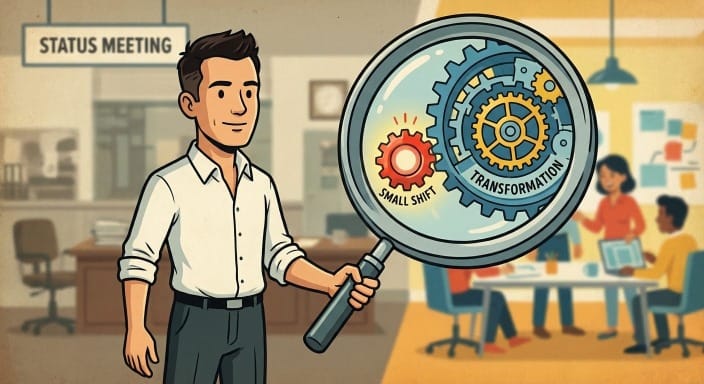
In most organisations, transformation begins not with the grand strategy deck but with something altogether more modest. An attitude shift. A process tweak. A behaviour change. One small adjustment that makes space for bigger ones.
This isn't the conventional wisdom. The conventional wisdom involves consultants, transformation programmes, and PowerPoints with arrows pointing upward. What actually works tends to be rather more prosaic.
The Art of Finding Leverage
Consider the weekly status meeting. In most companies, it's an exercise in looking backwards—who did what, who's behind schedule, who needs to explain themselves.
Change the opening question from "what got done?" to "what's blocking progress?" and you've shifted from accountability theatre to problem-solving.
Small switch. Different dynamic. Work gets unstuck.
Or take leadership's instinctive response to setbacks. "Who's to blame?" is the natural question. "What did we learn?" produces entirely different conversations. Same facts. Different outcome.
The best change agents develop a nose for these moments. They understand how work actually gets done—not how org charts suggest it should happen. They spot the difference between symptoms and root causes. And they have the patience to watch before acting.
This requires clear thinking about where change genuinely happens. Whilst leadership debates the five-year digital strategy, someone somewhere is solving a real problem in a new way. That's where momentum starts. Not with the announcement.
But with the Tuesday morning when someone does something differently and it works.
Why Most Organisations Miss This
The irony is that organisations hunting for transformation typically look past the obvious levers. They're scanning the horizon for breakthrough innovation when the real constraint is that nobody can find last quarter's data without sending three emails. Fix the small thing. Watch what becomes possible.
There's a certain amusement in observing how often "digital transformation" translates to "we bought expensive software and wonder why nothing changed." The software isn't the catalyst. The shift from "we've always done it this way" to "what would good look like?"—that's the catalyst. The rest follows.
The Question Worth Asking
Your organisation needs to change. That much is obvious. The question is whether you can spot where to start.
Not the comprehensive roadmap. Not the transformation programme. The one small thing that proves different is possible.
What could you shift today? Let's find it.