
Fail Fast Methodology
You've invested months in something built on assumptions nobody has tested. The cost of being wrong grows every week. You suspect a cheap experiment could tell you what you need to know, but nobody's run it.
Fail Fast Methodology is the Lean Startup principle of designing experiments to surface wrong assumptions quickly and cheaply, before the investment makes pivoting painful. You define falsifiable hypotheses and run minimum viable tests — the smallest thing that proves or disproves each critical assumption.
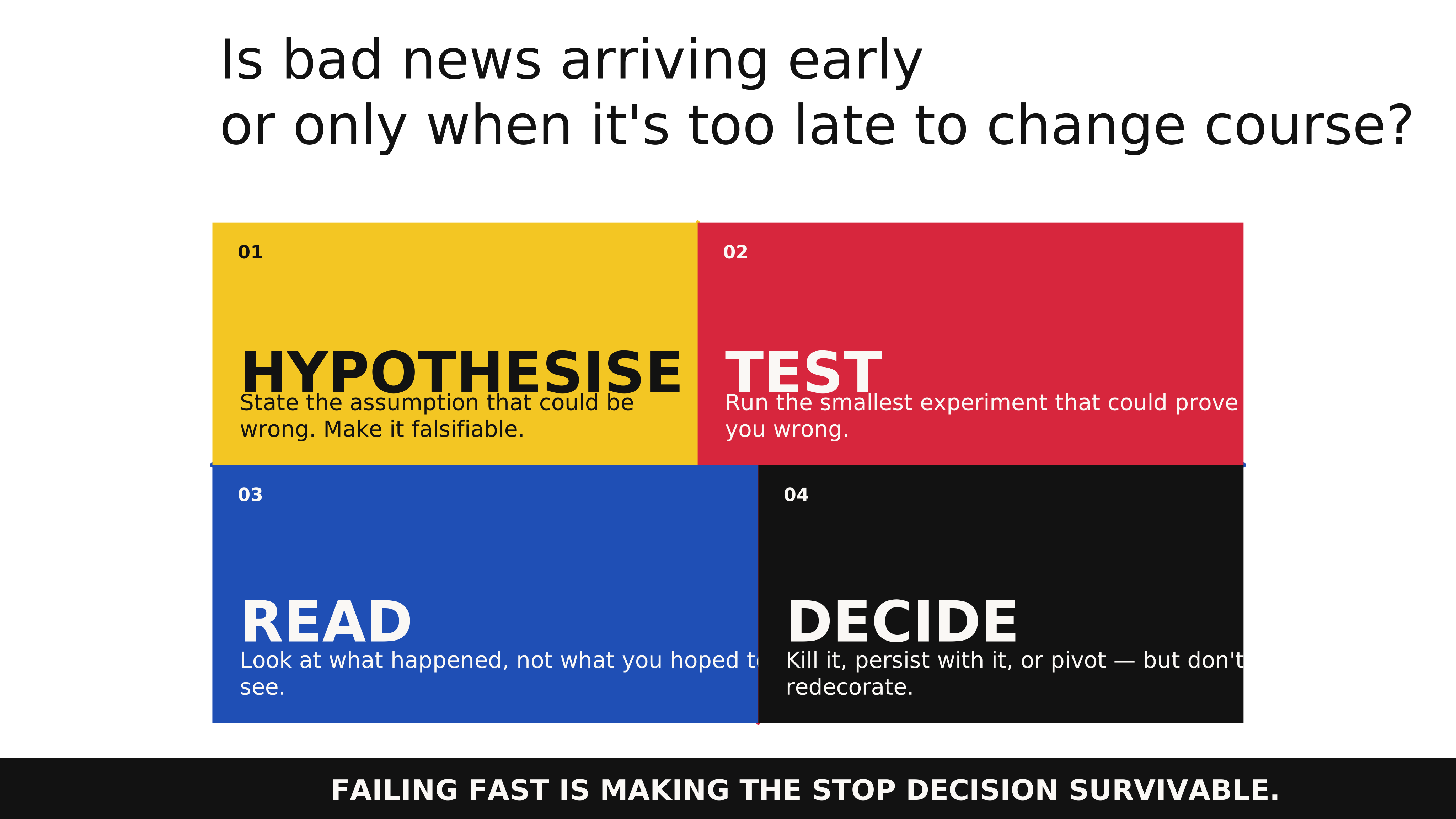
'Fail fast' doesn't mean accepting failure — it means structuring your learning so you discover bad news early, when changing direction is still affordable. The approach only works when the organisation actually learns from failures rather than punishes them.
In a blame culture, fail fast becomes fail secretly, which is worse than not trying. It's the right reach when assumptions are stacked and untested. It fails when failure carries severe consequences — you don't fail fast with bridge foundations — or when there's no infrastructure to capture what each experiment teaches.
Your next move: What's the smallest, cheapest experiment that would tell you the project is doomed — and why haven't you run it yet?
What it looked like for them
Dijiwan, early 2010s. Dijiwan raised half a million euros for a web-graph marketing tool. When customers didn't materialise, the founders didn't fail fast. They redefined "the plan" until the evidence looked like progress. PR coverage became proof of traction. Office fit-out became proof of company health. An LED television on the wall became proof of being a serious company. None of it was revenue. None of it was a customer saying yes.
The founders treated cosmetic activity as evidence the plan was working, because admitting the plan wasn't working would have meant stopping — and stopping would have meant failing. The company eventually went bankrupt. The post-mortem reads as an inventory of signals the founders chose not to read. Fail-fast methodology exists to make the stop decision survivable. When stopping feels like death, teams will redecorate the office instead.
“I've been told to 'be more innovative' and I don't know what that means.”