
Retrospectives
The sprint ended. Some things worked, some didn't. Nobody's stopping to ask which was which.
Retrospectives are agile's technique for structured team reflection. You gather at a regular interval, examine what worked and what didn't, and agree on specific actions to improve before the next one.
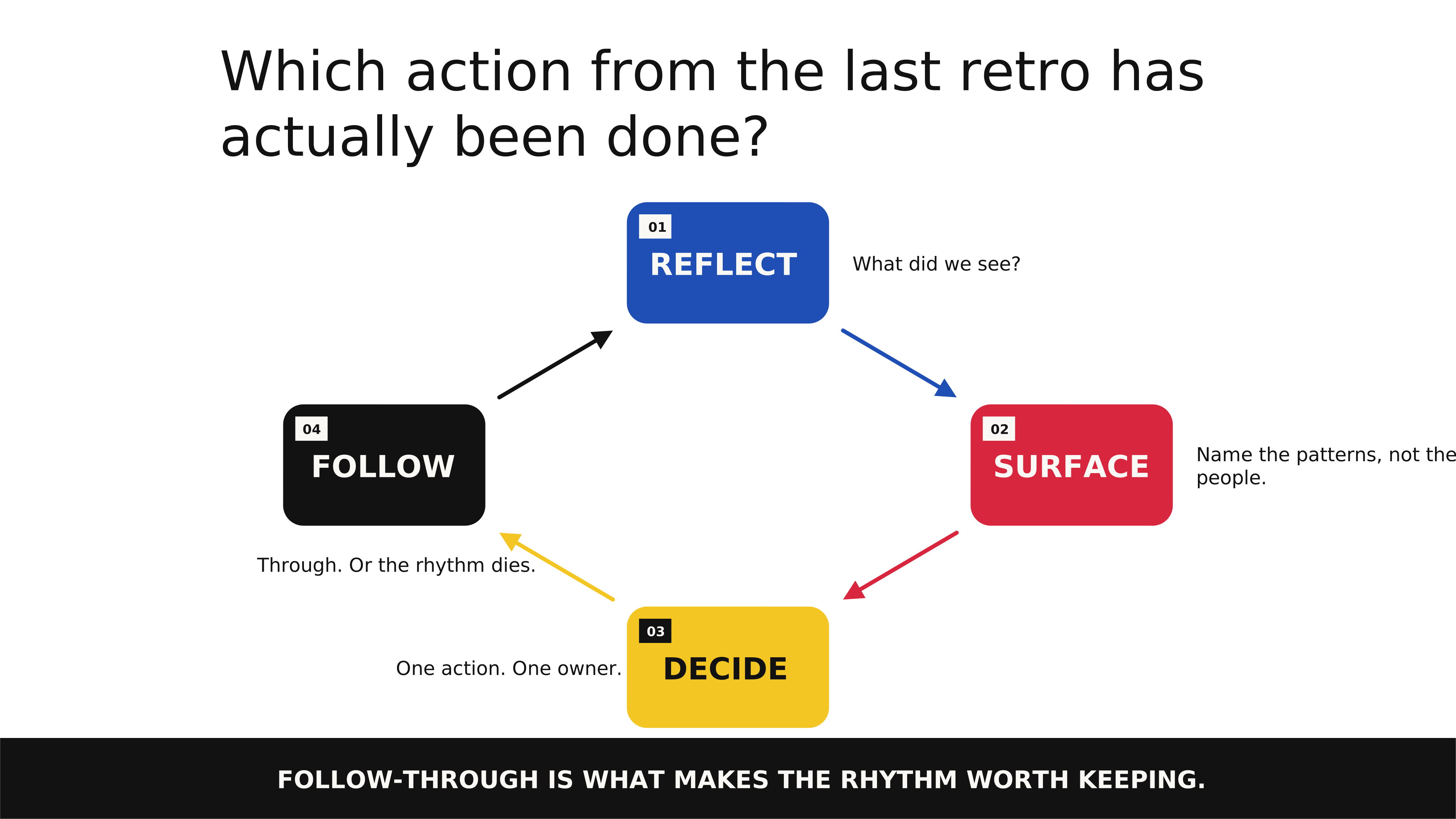
The value is in the rhythm, not the format. Sailboat, starfish, four Ls — the shape matters less than genuine engagement and follow-through on agreed actions. A retrospective that produces no change is an empty ritual, and teams learn this fast: after two or three rounds where nothing improves, honesty drops and attendance becomes grudging.
The technique needs psychological safety — people won't say what's actually wrong if they'll be punished for it. It also needs skilled facilitation to stop sessions becoming venting that feels productive but changes nothing. When it works, continuous improvement is embedded in team rhythm rather than left to chance.
Your next move: Which action item from your last three retrospectives has actually been done — and if the answer is 'none', what is the retrospective even for?
What it looked like for them
Marc Hedlund, Wesabe, 2010. Wesabe was an early personal finance startup that lost to Mint. Most founders in that position blame timing, or the market, or the competitor's funding advantage. Hedlund wrote a post-mortem that did none of those things.
He named two specific decisions: refusing to use automated data aggregation (forcing manual work that Mint didn't require) and prioritising behaviour-change tools over immediate-utility features. Mint did the opposite on both calls and won.
The post-mortem reads like a retrospective conducted in public — what was supposed to happen, what actually happened, why the gap, and what he'd do differently. Hedlund didn't soften the self-assessment or distribute the blame.
He pointed at his own calls and explained why they were wrong. That honesty is what retrospectives are supposed to produce: a clear-eyed account of the decisions that mattered, owned by the people who made them, specific enough to change the next decision.
“The dashboard says we're fine but I don't believe it.”